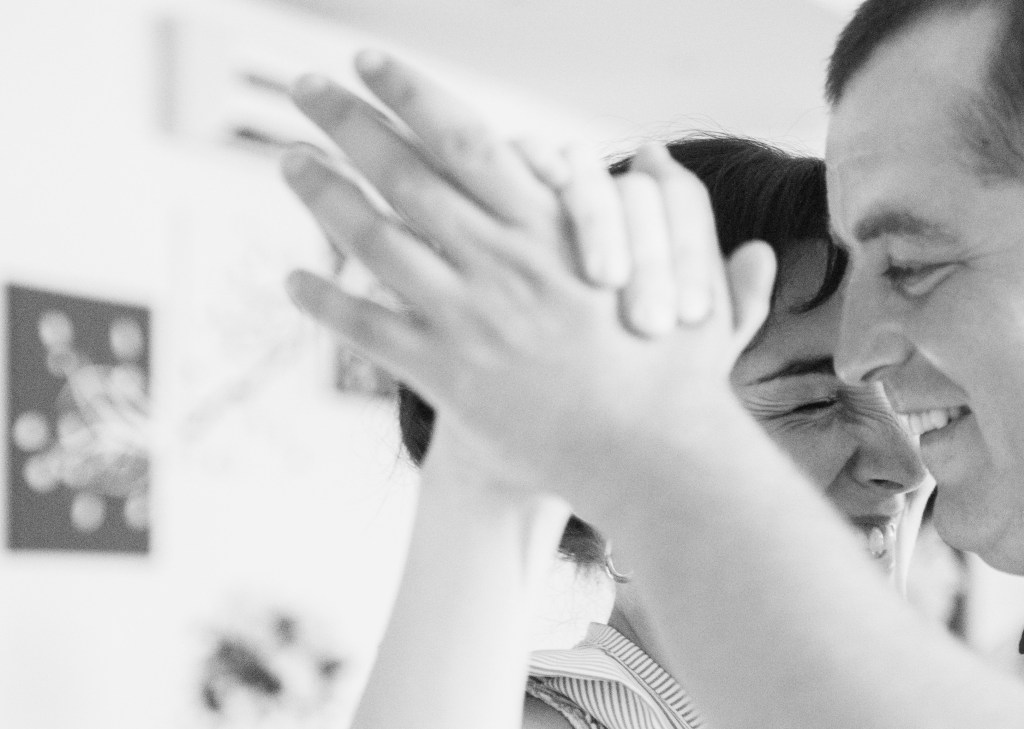
Dance and cultural anthropologists would surely be interested in the Dance Instructors (DIs) of the Philippines, some foreigners perceive them as thinly veiled sex workers, while others as part of the not so well respected entertainment class. As for me I’m two parts, am one but also an observer as someone who’s not normally considered as part of their group (economically) but am part of their circles (socially and creatively). I write this, to debunk a lot of presumptions about their line of work (that they’re flirtatious, that they’re always emotionally taken advantage of) and also to simply just have more first hand accounts of their experiences.
To be clear: Dance Instructor usually denotes someone who teaches dance. But in the Philippines, this usually denotes someone who teaches partner dancing, ballroom, dancesport, line dancing, social dances and party dances in parties and specific events. Partner dance, and the evolution of cultural dances is in itself an interesting study, but worthy of note that a lot of the artistocratic class of the Post-American War era built ballroom, to socialize, seen and be seen as folks who participate in culture. There would be social capital to study and participate in these dances. The history of latin and standard dancesport stems from Europeans, formally codifying latin-american dances, and american partner dances into a sport. It’s modern iteration not only enjoys an athletic formalization, but also popularization through shows like “Dancing with the Stars” and honestly these expensively constructed rhinestone gowns and costumes. In the same vein, I can attest that in contemporary manila, for the aristrocratic class to have aunts that “compete dancesport/ do ballroom” is both a leisurely activity but also status symbol to be able to afford to train and dress to compete at this level. These dancers are often called “guests” who are differentiated from the instructors who are usually not as well-off and who usually teach, choreograph, perform and organize events as a full-time job. Their investment is their bodies (it is exhausting to train in dancing) but as well as their appeal and charm as they usually provide social company for their richer clientele who look for entertainment in their parties as well as artistic leisure.
On Filipino Hospitality and Emotional Labor
I am always quick to correct foreigners every time they have a judgmental gaze or tone towards DIs being paid for their jobs. “What if that beautiful girl didn’t want to dance with that one old man all night. This guy has been monopolized by that lonely woman/matrona (matron, female patron) all this time, isn’t that sad?” — here’s the thing for you: I know income disparity is sad, but what if, just for a second: these DIs actually liked taking care of people in this same very way?
I’m reminded by one of my good friends, half black filipino charming tall and handsome, who’s always booked by multiple guests (older women usually) who he dances with and who he provides good conversations for the night. I remember all my male DI friends, who are socialized into taking care of women properly, who study these partner dances that have the poetry (tango, rumba, salsa) of being playful and connected towards a partner, and who simply are better at giving attention than your non-dancing average joe. I think about how social dancing is all about attunement to another person, and how instructors are naturally better at this. Going back to my friend: he told me once: he loves his job. He loves taking care of women, and he says this to me in the most studied and satisfied gaze with the emotional acumen that is usually afforded to female therapists.
Let’s rewind a bit. Why is it first that emotional labor isn’t seen as labor in the first place? Why is it that it feels disgusting for emotional labor to be paid for, something spicy, when a japanese host is paid to be so flattering in their conversation with you? Is it because of this unspoken loneliness of modern culture? Maybe it’s because we associate money as being coercive and manipulative in what should be “free and sincere connection”. Maybe it feels too domestic/intimate and the realm of monetary exchange should be in commerce, goods and business and not with people and their bodies, nevermind service jobs, cashiers, therapists, tour guides, where people are paid to be cordial and nice to you. Maybe the real issue, is that DIs hold your body while giving you all this attention, and maybe that’s erotic. And unless you see any kind of erotic work as work anyway (pretty lady listens to you while you rant, pretty lady dances with you cause it makes you feel good) then ofcourse you would feel uncomfortable about the lines in this labor class, because it’s emotional and sometimes, eros is involved.
I would like to state some very obvious things, but would like to state this clearly to get it out of the way:
- Some people hire DIs really purely to learn dancing. They get them to teach line dances in a wedding, to choreograph a debutante’s 18 roses dance, or to learn a partner dance straight out. We should never minimize the craft of studying a cultural art form, and the embodied knowledge of teaching someone how to party, the way a filipino ought to party. It is a very memorable thing for couples to learn how to first hold their partner, and for younger people to learn to be comfortable in their bodies, in a party setting, or holding someone of the opposite sex. I really feel like this is an important initiation and I am happy that there are people who train and usher in whole families and groups of people to learn how to enjoy themselves. I hope that people’s assumptions around the erotic side of knowing one’s bodies never clouds the responsibility, impact and very real artistic labor that these DIs contribute.
- I also want to recognize that yes, some guests really do fall in love with some DIs, lavishly sugar mommy/daddy their way into their DIs hearts, with cars, watches and gifts. I know that these partnerships break-up, and I know that DIs, trained dancers are some of the most attractive, and are socialized to be charming and attentive people ever. I know! I’ve loved some of them (and ironically they were half-egyptian too so talk about the energy of being a trained flirt!) I want to emphasize that this is not a given in every DI relationship, and I have had DIs have healthy married/ long-term relationships with non-dancers, fellow dancers, newbie dancers, platonic relationships etc, while also fulfilling their “night” job as a DI for hire. If anything, it’s actually more clear in a social dancing set-up that any flirtatious energy is part of the dance, part of the dream/escape that is the music or the club, and that come day time it doesn’t really mean anything. I have DI friends who flirt with me for fun and in some ways it’s actually funny how I can be their practice dummy for things, fully knowing, that they’re really only my friend and that was a really good boyfriend simulator for 4 minutes to a bachata song etc. I’ve read in salsa forums countless of times that for you to be clearly flirting with someone on the social dancing floor, you have to explicitly ask them to date outside of their dancing, unless you want your bodily queues to simply be misread as an extension of the playful dance.
( A side note: afro latin social dances like salsa, bachata, kizomba are a later development in the DI scene in metro manila/ the Philippines, it started being introduced around 2014 and has had hubs in cebu, makati and other provinces. There is a DI population that is serving this community, but there are also other instructors/dancers in this field who are more a “roving” type, or just a social dancer, who do not have a singular/consistent DI-guest relationship. If anything, I fall in this latter category as I do teach line dancing, and dance classes, but have never strictly taken on a guest. I’ve been invited to once by a much older man who’s notorious for liking having beautiful women sit beside him in the club and it was a very specific sensation to be asked what’s your rate for your hourly company, rather than, well, movement instruction. I turned down his request, respecting this type of labor, but also knowing I have too many jobs already to go and fulfill another I don’t exactly need as much as others would).
Sometimes I personally wonder how this specifically filipino phenomena came about, but it also simply makes sense as so much of our work force is in service jobs, and are notoriously brilliant in hospitality, not to mention that natural South East Asian heart chakra energy. I’ve already mentioned Japanese Hosts, but I would also like to mention all the emotional labor baked into the typical K-pop idol and how in collectivist society, this socialization towards being able to perform emotional labor is not only rewarded, but is also something we’re not so averse to monetarily paying for.
I write this because I’ve also had friends who have had to mask their dance personas during job interviews as these are perceived to be too much like prostitutes, having their intellectual capacities, and job competencies because of their passion or hobbies in dance. I acknowledge that this is not specific only to social dances, as pole dancing, dancehall, and booty-adjacent dances also suffer this same predicament to closed minded industries that still police bodily expression outside of their employees work environment. Yes the body is political, yes the body is part and parcel of their job, both visually and physiologically as the thing that let’s them move, but I would really attest that their private leisures or side-hustle is not their employer’s business. If anything it’s an asset to have someone who is so bodily and emotionally attuned to be part of your staff, but that would be my personal preferences speaking.
To tell you the truth, I’ve been meaning to write about this for a while. I’ve vacillated between committing towards a very formal and academic study around their case study experiences, to very punchy opinion pieces on how the emotional labor done by DIs for lonely wives could save marriages (and people’s mental health). In the end, I feel like I only wanted to write as neatly, and as accessibly as I can, explaining the basics of what DIs are defined and perceived to be, and debunking the common presumptions against them with direct thoughts and first-hand examples. I hope that the physical and emotional aspects of their jobs is come to be more respected and that the erotic charge that comes alongside their dances is also lucidly seen as both work but also culture but also play. I’ve had DI friends who’ve had to manage having their guests have obvious crushes on them, and drawing lines to how they can be interfaced with especially when said DI is already married or is simply their to teach you dancing and to keep you company for the night. There are many viral posts about jobs to be “your dad for the day, a quiet friend for the day, platonic hugs, a hot hiker tour-guide who would let you touch their abs by the end of the hike” because it does feel transgressive to pay for something domestic, relational, and the tangentially erotic.
I believe the fact that these viral posts and jobs are cropping up in the first place is because the art of the domestic, relational, sure! tangentially erotic is lost in the everyday rhythms of our daily lives. For when else can I passively hold and converse with a new stranger, to a nicely played love song. Where else can men be socialized to learn how to hold but not offend a woman? Where else is the magic of the accidental meeting consciously cultivated? How good are your cities’ third places? Do your young people know how to date? If someone is that ridiculously good at spoiling you, wouldn’t you be so glad to pay them for giving you a good time?
I hope this short article/essay? helped spark thoughts within you, a wonder maybe of how we even conceive and perceive of labor, of how we minimize the value of charm, and emotional caretaking, how giving someone attention is a trainable and learnable skill. I hope it makes you think about the body politic and how the people who teach us to be free in our bodies (gym trainers, masseuse, dance artists) are often the ones who populate our erotic imagination, as they are also usually the ones who teach and guides us into having a connection with our bodies anyway. We’re allowed to have pleasure in our bodies! Yes that has the tricky terrain of manipulation or even abuse, but know that the pleasure of being able to sense one’s own body is value neutral and to acknowledge one population (dance instructors) in their contribution to this, would make me happy in what I know to be a very nuanced and long-playing conversation.
On my birthday, I usually ask folks to dance for themselves as a birthday gift. In this post, I ask folks to have more understanding, openness and even desire to go hire, befriend and be with our very cool and generous Philippine DIs.
Til Next time.
PS: article photo is obviously not from the PH and is from unsplash
 maria mison: integrated awakenings
your soul is welcome here