on Philippine Art perceptions and education
Art education presents us with the curious question of what is considered art and education by a certain socio-cultural community? What is aesthetic? Must Art take a certain skill? (Fine vs Folk-craft art) Towards what aims: of balance, clarity, space or even politeness? Art Education by definition aims to teach art, in the skills based sense of the word but also the holistic all enrapturing development that it entails. Think of the folk drama and rituals, from pasyon to large fiestas ala mardi gras: they aren’t purely decorative, they fulfill social functions of repentance, collaboration, good fortune, women’s labors and relevant local stories.
A question is brought up critically in class: Why don’t filipinos have an appetite for artistic culture?
I would have a quick answer: We express ourselves artistically outside what is colonial accepted as artistically pleasing.
We love a mess, horror vacui and syncretism with easy maximalism: anikaniks bag charms, inter-linguistic memepuns, kareoke marathons til the morning, and a very family specific mish-mash of local folklore and roman catholicism. I’ll give another example: Why is the best local filipino cuisines not formalized in restaurant experiences? Short answer: because the best dishes we reserve only for family and special occasions (despedida, bagong uwi etc).It’s Lutong bahay, why would we serve that outdoors? This person sings so well why don’t they do that professionally— well they only sing for the Church?
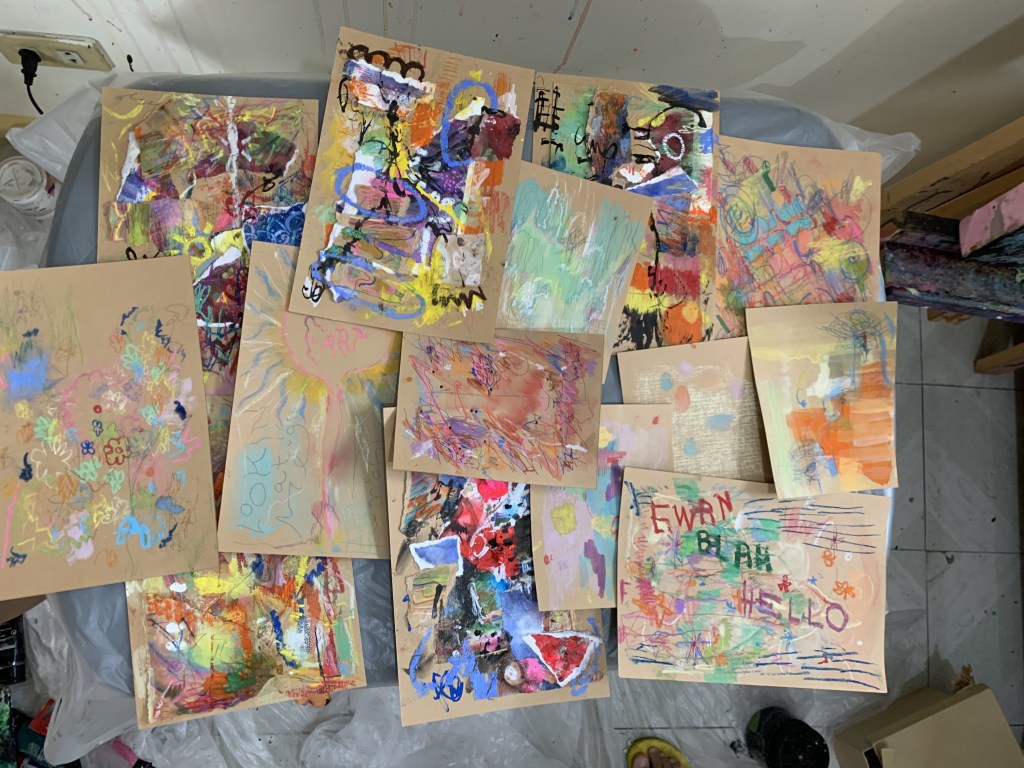
To want to teach art education in the Philippines is to study the criminally underrated creative truths of the filipino people. It’s to pick apart literary themes that straddle social class, diaspora, and a specific unlearning of self-hatred imposed upon a typically subjugated nation. Listening and creating alongside OPM, one would notice how filipinos are such saps, but also so exalted about our conceptions of sacrifice and longing. Such emotionality! Drama, compared to our east-asian disciplined cousins. Even the insecurity of a consistent identity is evident with our archipelagic multiplicity: how sensitive we are of our smallness, but also the heavy rains of our tides. To come to appreciate art, participate, and create in our cultural experiences is to be so directly connected to philippine families, values, emotions, tendencies, history. It’s almost an overwhelming feeling.
When one participates in Art, deeply and earnestly, a student (and the teacher is also a student) not only unlocks faculties by which they could creatively express themselves (to paint story, to hold a rhythm) but also the capacity to make themself into the World. Who are you? Who are we? To trace the rhythms of life one curates and situates, in photographs, symbols, memory etc.: This is me. This is Us, together in this specific universe. Where does this re-defining and opening even end? Art education, is a process more than an ending. A sponge-like absorption, and sense-making to what is True, Loving, Beautiful — at least that’s what the philosopher’s say.
Notes: this is a word count limited required reflection paper that I wanted to post on my blog. If I take time to write what I mean, must I not share it to the world?
xmaria
 maria mison: integrated awakenings
your soul is welcome here